Test & Tag In Atherton: How Often Does Your Business Really Need It?
Test and tag in Atherton is one of those compliance obligations that most business owners know they have but are genuinely unsure how to manage. How often is often enough? Does it apply to your business? And when you factor in Far North Queensland's wet season, does the standard interval even apply on the Tablelands?
This guide gives you a plain-English answer to all three, with realistic guidance on intervals, costs and what actually happens during a visit.
Quick Answer: How Often Does an Atherton Business Need Test and Tag?
The short answer is: it depends on your work environment. Under AS/NZS 3760 — the Australian standard governing in-service safety inspection and testing of electrical equipment — retest intervals vary significantly based on how and where equipment is used:
| Environment | Typical retest interval |
|---|---|
| Office and low-risk workplaces | Up to 5 years |
| Retail and hospitality | 1–2 years |
| Construction sites | 3 months |
| Wet areas and outdoor use | 6–12 months |
| Rural and agricultural sheds | 6–12 months |
| Hire equipment | Before each hire |
These are the standard intervals under the AS/NZS 3760 framework. In practice, Far North Queensland's climate often pushes Tablelands businesses toward the shorter end of those ranges — more on that shortly.
Is Test and Tag Actually a Legal Requirement in Queensland?
Yes and no — and it is worth understanding the distinction. AS/NZS 3760 is not a law itself, but it sits underneath Queensland workplace health and safety legislation. Under the Work Health and Safety Act 2011 (Qld), employers have a duty to ensure that plant and equipment used at work is safe. Electrical safety testing to AS/NZS 3760 is the recognised method for demonstrating you have met that duty. If an electrical fault injures a worker and you cannot demonstrate your equipment was tested to the required standard, your compliance defence evaporates. That makes test and tag effectively mandatory for any business with portable electrical appliances — which is essentially every business. Electrical safety testing Atherton businesses need most often centres on portable appliance testing, but RCD testing should be part of the same compliance program. Test and tag services Atherton businesses of all sizes rely on cover a café with three coffee machines and a couple of extension leads, a retail shop with vacuum cleaners and POS equipment, a farm shed with power tools — all of these carry the obligation. Landlords should also be aware: the obligation extends to appliances provided with a rental property or commercial tenancy in some circumstances.
Test and Tag vs RCD (Safety Switch) Testing — What's the Difference?
These are related but distinct services, and they protect against different failure modes.
Test and tag is portable appliance testing. A technician inspects each item visually for damage — frayed leads, cracked plugs, bent pins, burn marks — and then uses a PAT tester to measure insulation resistance, earth continuity and leakage current. Each item that passes gets a colour-coded tag showing the test date and next retest date. Items that fail are tagged out of service immediately.
RCD testing (residual current device — the safety switches in your switchboard) verifies that those switches will actually trip within the required timeframe when a fault occurs. An RCD that is never tested may look functional but fail to operate when it matters. Under AS/NZS 3760, RCDs used with portable equipment on construction sites must be tested every three months. For fixed RCDs in commercial premises, the recommended interval is six months to two years depending on the environment. Electrical safety testing Atherton businesses need most often centres on portable appliance testing, but RCD testing should be part of the same compliance program. Both services complement each other — a properly tagged appliance on a circuit with a faulty RCD is still a risk, and a functioning RCD does not compensate for a portable lead with degraded insulation. The same safety-first thinking behind our electrical safety upgrades for Atherton homes applies directly to keeping a workplace compliant — layered protection, not just ticking one box.
How the Tablelands Climate Shortens Your Retest Intervals
This is where Atherton and the broader Tablelands diverge from the generic national guidance. Far North Queensland's wet season — typically November through April — brings sustained high humidity, heavy rainfall and moisture that penetrates equipment faster than most southern business owners would expect. Power leads stored in a shed or used outdoors absorb moisture that accelerates insulation breakdown. Plugs and connectors corrode faster. Equipment used in hospitality kitchens or commercial laundries faces steam and grease that compounds the effect. The practical result is that appliances in Atherton-area businesses often degrade faster than their southern equivalents, and a 5-year retest interval that is perfectly appropriate for an air-conditioned Sydney office is not appropriate for a rural workshop where equipment gets wet regularly.
As a working guide for Tablelands businesses:
- Office environments in Atherton proper with no outdoor or wet exposure: standard intervals (2–5 years) apply
- Hospitality and food service (cafes, restaurants, commercial kitchens): annual testing recommended
- Retail premises with outdoor areas or regular cleaning: 1–2 year intervals
- Agricultural and rural sheds: annual to 6-monthly, especially for extension leads and handheld tools
- Any equipment used during or after the wet season: consider a post-wet-season inspection if equipment has been exposed to flooding, water ingress or extended outdoor storage
The most common fail we see across Tablelands workplaces is damaged extension leads — insulation cracked or worn through, plugs bent or discoloured. In a drier climate these deteriorate over years; in the Tablelands wet, a lead stored incorrectly can be unsafe within a season.
What Happens During a Test and Tag Visit (and What a Compliant Tag Shows)
A test and tag service typically takes one to three hours for a small business, depending on the number of items. Here is what a visit actually involves:
- Visual inspection of every portable appliance — the technician checks each item for visible damage before any testing. Items with frayed leads, cracked cases, bent pins or burn marks are flagged immediately
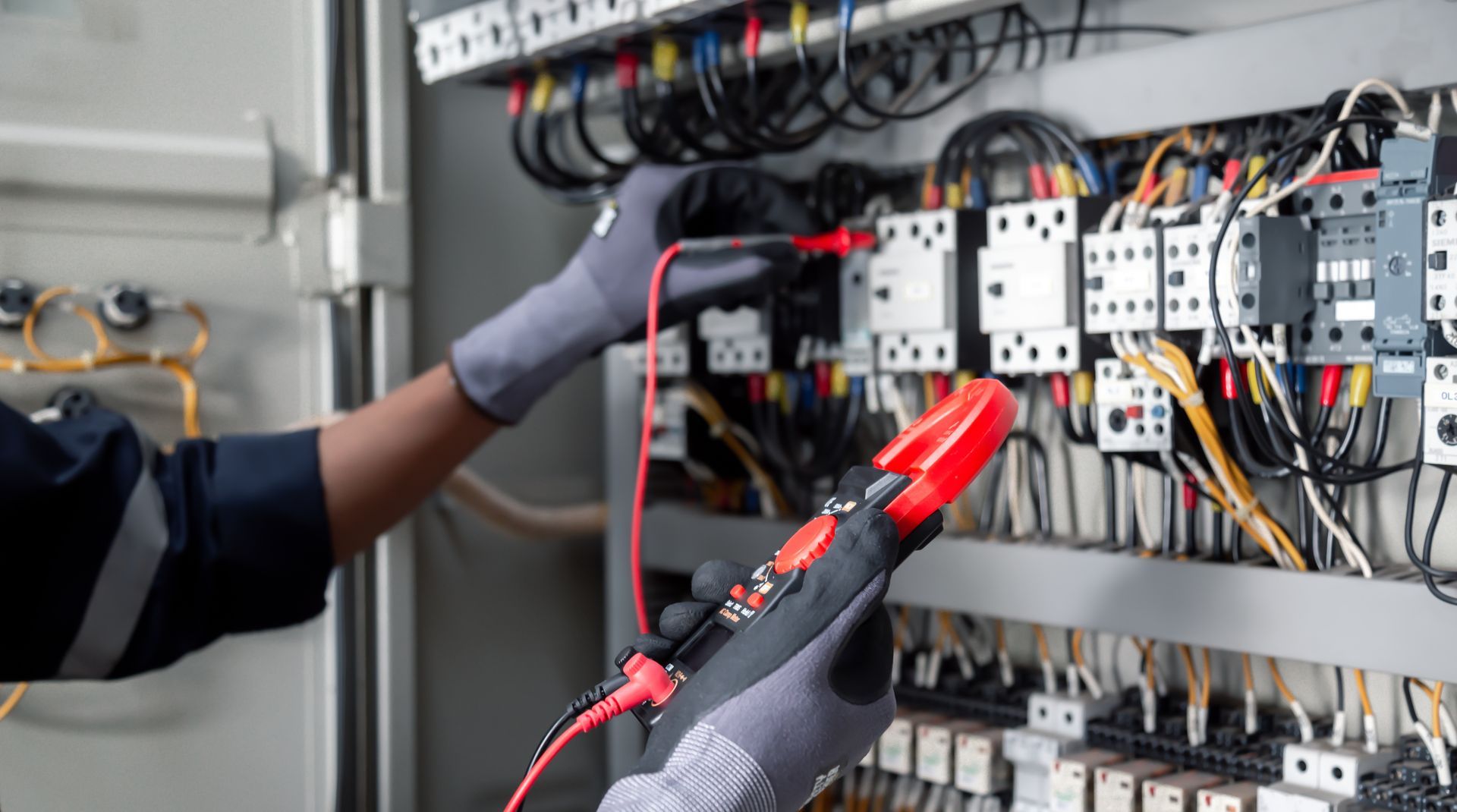
- PAT testing of each item — the portable appliance tester measures earth continuity, insulation resistance and operating leakage current
- Tagging of passed items — each item that passes gets a durable tag with the test date, retest date, technician details and asset identifier
- Removal of failed items — any item that fails is tagged out of service and cannot be used until repaired or replaced
- Documentation — a complete test record is provided, which is your compliance documentation if your WHS obligations are ever questioned
A compliant tag under AS/NZS 3760 must show: the date of testing, the retest date, the name or identifier of the person who performed the test, and a unique asset identifier. If a test uncovers a fault, our licensed electrician in Atherton can repair or replace the item on the same visit in many cases — minimising downtime and keeping your documentation clean.
How Much Does Test and Tag Cost for a Small Business?
Pricing for workplace electrical compliance testing varies by provider and job specifics. Some honest guidance:
- Per-item rates for portable appliance testing vary by the complexity of the equipment and testing required
- Call-out fees apply on top of per-item rates in most cases — ask about this upfront
- Larger sites with more items generally bring down the per-item rate
- Recurring schedules often attract better rates than one-off visits — and they ensure you stay compliant without having to remember to rebook
The honest answer is that test and tag for a small Atherton business with 20–40 items is not a large cost relative to the WHS exposure it mitigates. Ask for a written quote that includes the call-out fee, the per-item rate and whether compliance documentation is included. Not sure what to ask a provider? Our guide to hiring an electrician in Atherton covers the questions worth asking before you book any electrical service.
FAQs
Do I need test and tag if I only have a few appliances?
Yes. The obligation applies based on whether you have portable electrical equipment in use in your workplace, not on how many items you have.
What is the difference between a "tagged" and a "failed" item?
A tagged item has passed inspection and is confirmed safe for use until the retest date. A failed item must be taken out of service immediately and cannot be used until repaired and retested, or replaced.
Can I test and tag equipment myself?
A competent person can perform visual inspection, but the electrical testing component requires a licensed electrician or a person holding the relevant training qualification. For most Atherton businesses, it is simpler and more defensible to have a licensed technician perform the complete service.
How do I set up a recurring test and tag schedule?
When you book with Atherton Electrical, we record your site details, item count and applicable retest intervals. We can contact you ahead of your next due date to schedule the follow-up, so you do not need to track it manually.
What if some of my equipment fails?
Failed items are tagged out of service and documented. Depending on the fault, we can often repair or replace a lead or plug on the same visit. Items with more significant faults may need to be assessed for repair versus replacement.
Ready to stay compliant? Book a licensed electrician to set up a recurring test and tag Atherton schedule for your site. At Atherton Electrical, we provide test and tag services across Atherton and the wider Tablelands, with same-visit fault repair where possible and full compliance documentation included. Call us on 0409 954 067 or visit https://www.athertonelectrical.com/ to get a quote.